KFF The independent source for health policy research, polling, and news
- More Than 4 Million Medicare Beneficiaries Will Have Their Medicare Advantage or Stand-Alone Prescription Drug Plan Terminated at the End of 2026
 by kffjeanniefb on 27.10.2026 at 13:00
Data from the Centers for Medicare & Medicaid Services (CMS) shows that 4.3 million Medicare beneficiaries, including 3.1 million Medicare Advantage drug plan enrollees and 1.2 million PDP enrollees, will have their plan terminated at the end of 2026. An additional 1.4 million Medicare Advantage enrollees are in a plan that is consolidating with another plan offered by the same insurer.
- Can AI Find the Cure?
 by kffrobins on 27.10.2026 at 09:00
Medicine has its maps: Anatomists charted the body, and the Human Genome Project gave us the code. Now, the Human Cell Atlas, a global effort involving thousands of scientists, is using AI to create comprehensive reference maps of all human cells to understand human health and diagnose, monitor and treat disease. Given the extraordinary implications for drug discovery and potential cures, Chip talks with Dr. Sarah Teichmann, co-founder of the Human Cell Atlas, chair in Stem Cell Medicine at the University of Cambridge, and a non-executive director at 10x Genomics, among other roles, about the potential of the Human Cell Atlas.
- Survey: More Than Half of Women in States with Abortion Bans Wouldn’t Know Where to Get an Abortion if They Needed One, Up Since 2024
 by kffrainl on 26.10.2026 at 20:35
More than half (53%) of reproductive-age women living in states with abortion-provision bans say they would not know where to go or where to find information if they needed an abortion, up from 43% in 2024, according to a new KFF survey.
- Women’s Experiences with Abortion, Access, and Concerns About Future Pregnancyby kffivetteg on 26.10.2026 at 20:35
This brief provides national estimates from the 2026 KFF Women’s Health Survey on reproductive age women’s experiences with abortion, the impact of Dobbs on abortion access and women’s concerns about future pregnancies, as well as women’s knowledge on the availability of medication abortion.
- Overview of President Trump’s Executive Actions Impacting LGBTQ+ Health
 by kffbritw on 26.10.2026 at 20:27
This tracker examines Executive Actions taken by the Trump administration that have the potential to impact LGBTQ+ people’s health. It lists the action taken by date, provisions relevant to LGBTQ+ health, and describes potential impact, including litigation challenging these actions.
- Tracking Key Mental Health and Substance Use Policy Actions Under the Trump Administration
 by kffnirmitap on 26.10.2026 at 16:41
A new KFF tracker highlights key federal policy actions during President Trump’s second term that concern issues related to mental health and substance use. The second Trump administration has emphasized law-and-order strategies and scaled back several mental health and substance use-related services, while also continuing some treatment-focused initiatives. The tracker can be viewed in multiple ways, including chronological order of policy actions and by category (Mental Health; Opioids/Substance Use Disorder; Federal Infrastructure/ Data/Guidance; and Gun Violence).
- How Does the Quality of the U.S. Health System Compare to Other Countries?
 by kffamyj on 23.10.2026 at 21:00
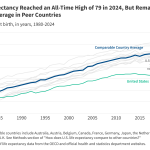
This chart collection compares the United States and other similarly large and wealthy nations across various measures of care quality to show how the U.S. stacks up against its peers and how that has changed over time.
- Americans’ Challenges with Health Care Costs
 by kffaeronw on 23.10.2026 at 19:33
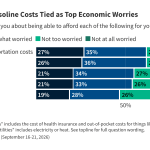
This data note summarizes recent KFF polling on Americans’ experiences with health care costs, which factor into decisions about insurance coverage and care seeking and consistently ranks as a top financial worry for adults and their families.
- What We Know about Trump’s $500 ACA Checks and the User Fees Funding Them
 by kffjustinl on 23.10.2026 at 17:53
This analysis examines the $500 checks that the Trump administration is sending to some Affordable Care Act Marketplace enrollees and the user fees that are paying for them. The checks are going to about 1 million enrollees in the 30 states that rely on the federal HealthCare.gov Marketplace who are not receiving any tax credits this year – a small share of the 19.2 million people who were enrolled nationally as of February.
- Assessing Ability to Work: How Historical SNAP Processes May Vary from Medicaid
 by kffamayad on 22.10.2026 at 14:02
In light of the uncertainty surrounding how states will verify the Medicaid medical frailty exclusion, this issue brief describes how the Supplemental Nutrition Assistance Program (SNAP) has handled similar administrative challenges.
- How Much is Health Spending Expected to Grow?
 by kffamyj on 22.10.2026 at 13:28
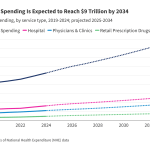
This chart collection explores how much health spending is expected to grow in the coming years, with a look at growth in prescription drug spending, out-of-pocket spending, and related trends.
- Recently Released KFF Poll Shows Uncertainty Over Established Safety of COVID-19 Vaccines During Pregnancy – The Monitor
 by kffhagerey on 22.10.2026 at 12:00
KFF’s recently released Tracking Poll finds that public confidence in the safety of COVID-19 vaccines for use during pregnancy has fallen, and many are uncertain about a false claim linking the vaccines with higher risk of miscarriage. Separately, conversations about childhood vaccines frame vaccination as an individual parental decision.
- 2026 Employer Health Benefits Survey
 by kffcarenec on 22.10.2026 at 09:00
This is the 28th Employer Health Benefits Survey (EHBS) and reflects employer-sponsored health benefits in 2026. As in years past, the survey examines trends in employer coverage, including premiums, employee contributions, deductibles, offer rates, and employer practices. This year, we asked employers detailed questions about satisfaction with their health plans; coverage of GLP-1 agonists and IVF; actions taken in response to projected cost increases; and firms’ ability to obtain information about health care costs and utilization.
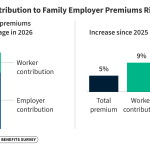
- Workers Now Pay $7,471 on Average Annually for Family Health Coverage, Up 9% or $621 from 2025, Benchmark Employer Health Benefits Survey Finds
 by kffrainl on 22.10.2026 at 09:00
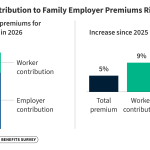
Workers are paying on average $7,471 annually toward the premiums for employer-sponsored family health benefits this year, which is up 9%, or $621, from 2025, per KFF’s annual benchmark health benefits survey of large and small employers. The burden of family premiums hits particularly hard for workers at small firms with less than 200 workers.
- Premiums and Worker Contributions Among Workers Covered by Employer-Sponsored Coverage, 1999-2026
 by kffmichaelp on 22.10.2026 at 08:59
Since 1999, the Employer Health Benefits Survey has documented trends in employer-sponsored health insurance. Every year, private and non-federal public employers with 10 or more employees complete the survey.